
In late November of 1808, while electors were still being selected and the outcome of a presidential election, though obvious, did not yet officially belong to James Madison, a son was born into a tobacco-farming family in Granville County, North Carolina, a family whose roots stretched up into tidewater Virginia and almost as far back as the settling of Jamestown in 1607.
Thomas Green grew up in an area profoundly affected by the Second Great Awakening, and what resulted was the planting of many local Baptist churches. By the time Thomas Green was in his late thirties, many of these churches had grown cold toward the Great Commission. A group of believers who did not share the anti-mission views of their respective fellowships, Thomas Green included, came together to plant a church in Knap of Reeds.
The year was 1845. Knap of Reeds Baptist Church continued at its original site until 1942, when the United States government claimed eminent domain and seized a large chunk of land in the area for a military training facility. The Green family lost 636 acres of land and was compensated poorly. Moreover, the Knap of Reeds Baptist Church building was torn down.
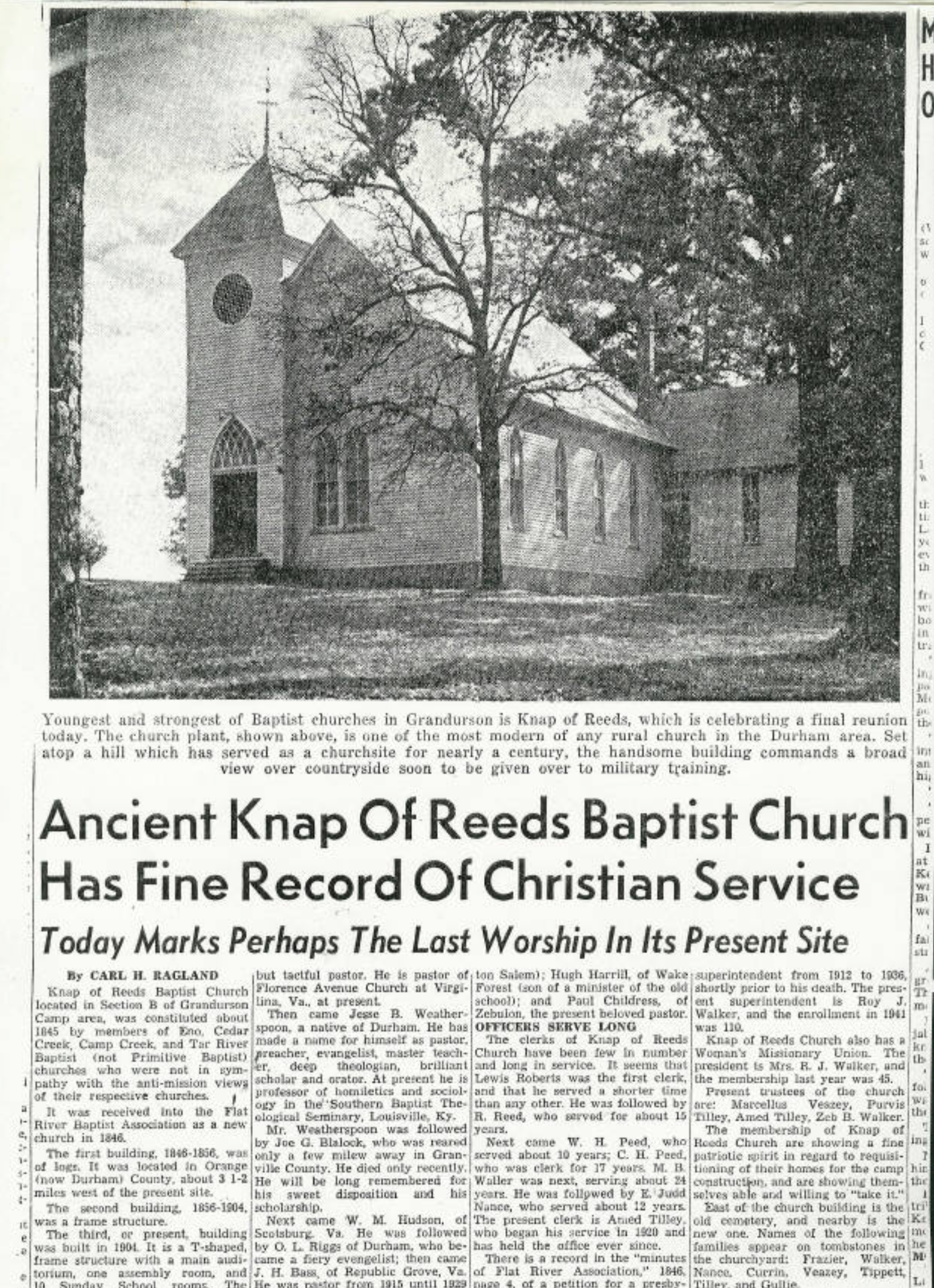
Article from a Durham, NC Newspaper (ca. 1942)
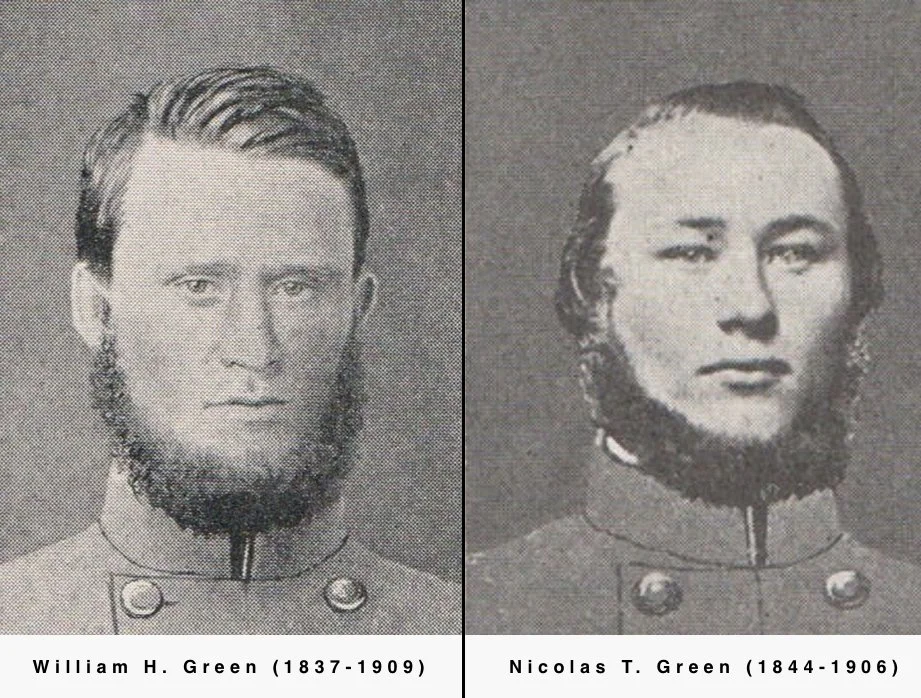
Notwithstanding all of this, a mission-minded Baptist tobacco farmer and church planter in Granville County, North Carolina, who had grown up during the Second Great Awakening, had thirteen children of his own. Two of them, brothers, went off to war less than two decades after the planting of Knap of Reeds Baptist Church. Nicolas T. Green, born in November 1844, was only sixteen years old when he enlisted in Company E of the 23rd North Carolina Confederate Regiment. It was June 5, 1861, not quite eight weeks after the Yankee provocation at Fort Sumter. His older brother, William H. Green, born in September 1837, enlisted in Company K of the 55th North Carolina Confederate Regiment in May 1862, nearly a year later.
Teenage Nicolas saw action in the Seven Days’ defense of Richmond, at Antietam and during the single bloodiest day in American history, in the defense of Fredericksburg, and in the Army of Northern Virginia’s great victory against overwhelming numbers at Chancellorsville. He was only eighteen years old when he was wounded and captured during the first day of fighting at Gettysburg. He spent the next two months hospitalized at David’s Island in New York Harbor and was then paroled and transferred back to City Point, Virginia, for prisoner exchange. He returned to duty with the 23rd North Carolina sometime before Christmas in 1863.
William Green, twenty-four years old when he enlisted, got sick in camp and was furloughed the next month. While his teenage brother’s regiment was involved in heavy fighting over the next year, William’s regiment was stuck on dull garrison duty in eastern North Carolina.
That all changed with the untimely death of General Stonewall Jackson. Lee was forced to reorganize the Army of Northern Virginia into three corps, and the 55th North Carolina was brought out of eastern North Carolina and into the army that began its march toward Gettysburg. Unfortunately for William, he got sick again, this time with dysentery, and spent the next eight months in a Richmond hospital, missing Gettysburg entirely. As he lay in a hospital bed, his regiment, the 55th North Carolina, made it to the stone wall on July 3, 1863, part of Pickett’s Charge, but was wrecked, suffering more than 30 percent casualties. His teenage brother was wounded and captured two days earlier near the Mummasburg Road.
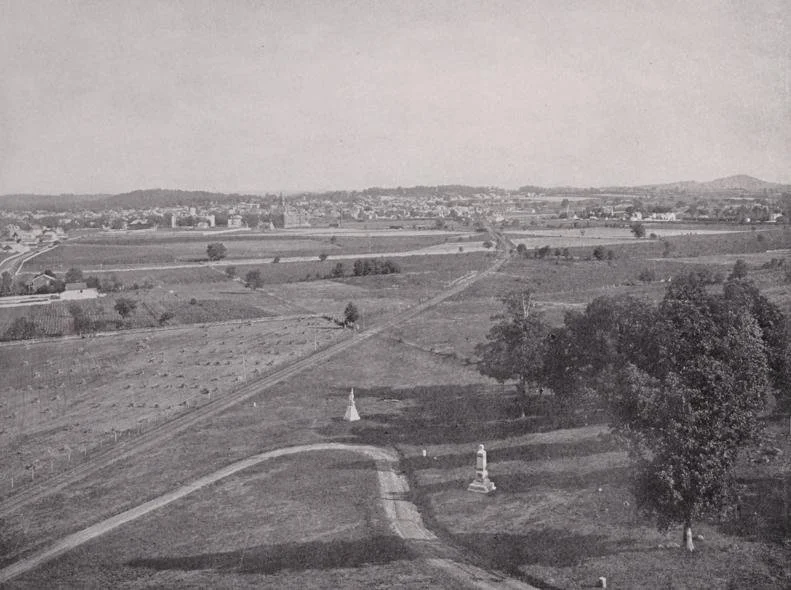
This 1911 photo was taken from an observation tower on Oak Hill, looking south toward Gettysburg, with Little Round Top on the distant right. Nicolas Green was captured on July 1, 1863, in the open fields in the middle distance below, where his regiment was broken in the attack across the Mummasburg Road.
On October 3, 1863, three months after Pickett’s Charge, Abraham Lincoln issued a proclamation appointing the last Thursday of that November as a national holiday of Thanksgiving. That Thursday, November 26, 1863, William Green was five months into an eight-month hospital convalescence: no regiment, no family, no holiday cheer. He ate invalid food with a roomful of other sick men. That same day, Nicolas was camped on the Rapidan River, right before the Yankees’ disastrous Mine Run campaign. As he sat by a fire, his daily ration most likely consisted of dry cornbread and a piece of bacon with a hot cup of something brown. For him, and many others, there was nothing special about that appointed November day of Thanksgiving in 1863, and there certainly was no turkey, stuffing, or cranberry sauce. Back home in Granville County, Thomas Green, the Baptist church planter, did not enjoy the company of two of his sons. They had gone off to war.
A third of Nicolas Green’s war service was spent in Yankee prisons. A third of William Green’s war service was spent on sick furlough. But ironically, these two brothers ended up on the same battlefield, in the same Mule Shoe, less than half a mile from one another on the Confederate line of defense. It was May 12, 1864, near Spotsylvania Courthouse, when Union troops came out of the fog at dawn and overran the works at the western angle of the salient. For nearly twenty hours, the two armies stood across a parapet no wider than a man’s shoulders, muzzle to muzzle, and an oak tree two feet through was chewed down by rifle fire alone. That place has been called the Bloody Angle ever since. And there, in the mud and powder smoke, stood William and Nicolas Green, each man fighting for his few feet of that angle, neither one knowing the other was there. One had been weakened by months in a Richmond sickbed; the other had been hardened by many battles, a Gettysburg wound, and two months of capture up north. Neither was whole. Amazingly, both brothers survived May 12, 1864, some of the war’s fiercest and deadliest close-quarter fighting, and they did so unscathed. William Green stood his ground throughout that awful day, and Nicolas Green was again captured. He was sent to Elmira, New York, at eighteen years of age and sat in that Union prison camp until his release on June 27, 1865, two months after Lee’s surrender to Grant at Appomattox. The Bloody Angle was his last fight. Two brothers in the same mud, at the same angle, in the same hour: for one of them, the fighting days came to an end. For the other, it was really just beginning.
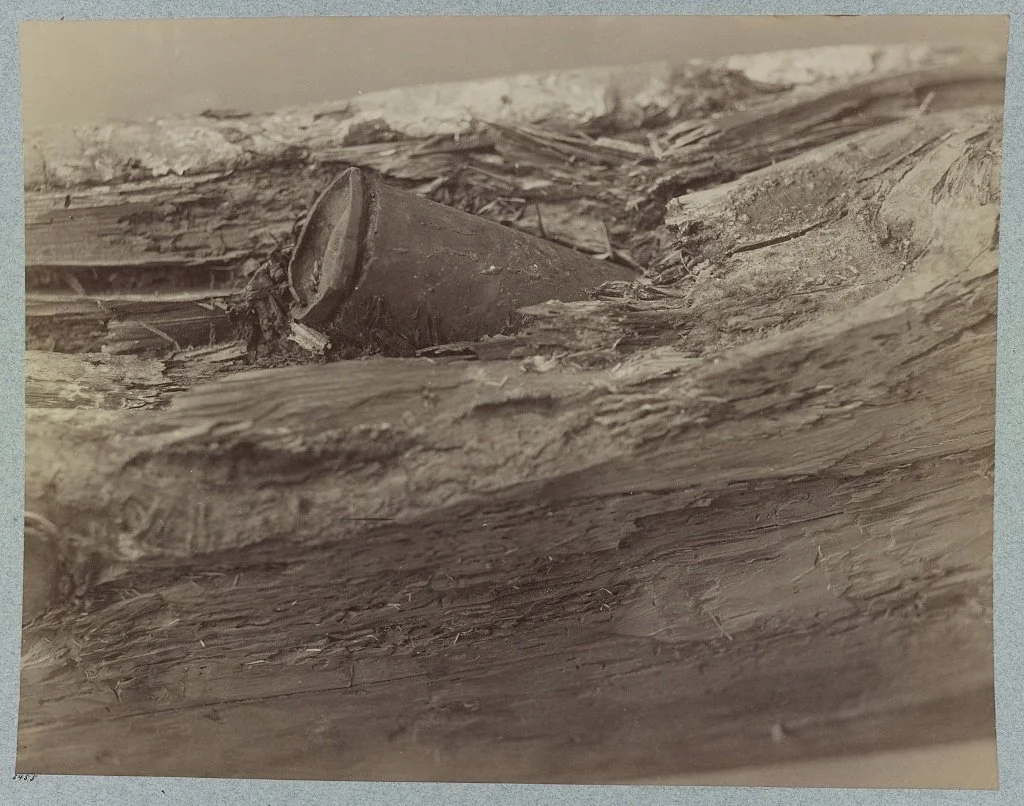
This photo taken ca. 1863-1865 shows a Confederate shell lodged in a tree at the Bloody Angle.
Ironically, the sickly William Green, who missed out on Gettysburg because of a bad case of diarrhea, saw fierce action in the Wilderness on May 5 and 6, 1864, less than a week before he stood on the defense line a few hundred yards from his teenage brother at the Bloody Angle. General Grant marched his army across the Rapidan River and straight into a scrub of oak and pine so thick a man could not see ten yards. He expected to slip past Lee’s flank and fight in open country, but instead, the two armies collided in the brush along the Orange Turnpike and the Orange Plank Road. The fighting broke down into a private’s battle of muzzle flashes, with men firing at the sound of the next voice.
The 55th North Carolina went in along the Plank Road, and when the dry undergrowth caught fire, wounded men tangled in it burned alive. William Green’s regiment suffered 60 percent casualties, and that was BEFORE the Bloody Angle.
William continued in service with his decimated regiment and saw brutal fighting along the North Anna River and in the Petersburg trenches. On June 3, 1864, at Cold Harbor, Grant sent fifty thousand men against a fortified defensive line. Somewhere between four and seven thousand of them fell in about half an hour against some fifteen hundred Confederates. It was the worst defeat Grant ever suffered, and he wrote afterward that he had always regretted ordering it. William Green stood behind earthworks on that line and somehow survived the assault by overwhelming Union numbers, unscathed.
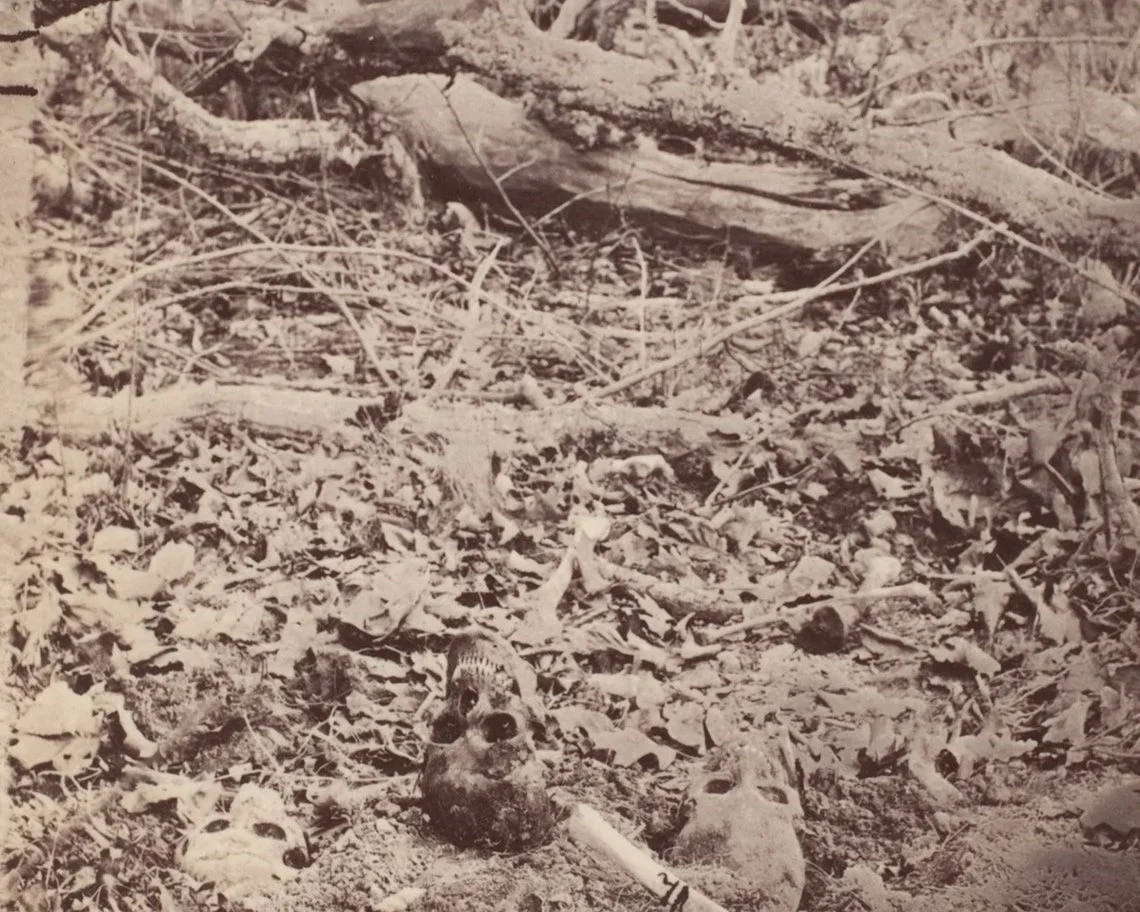
This 1866 photo shows bones of the dead still strewn on the Wilderness battlefield.
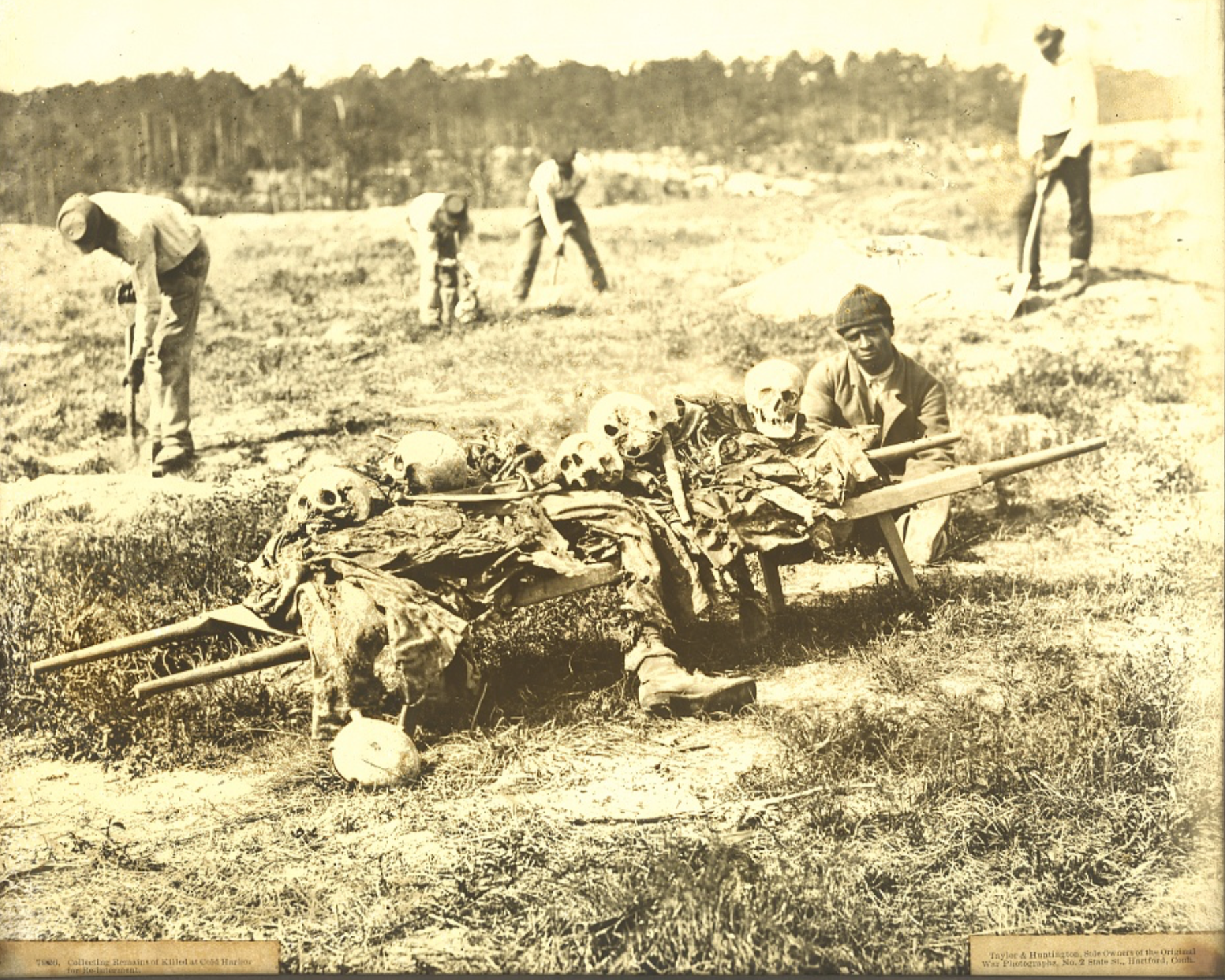
This 1865 photo shows a burial detail working the Cold Harbor battlefield.
On October 21, 1864, a little less than five months after Cold Harbor, Abraham Lincoln issued another proclamation appointing the last Thursday of that November as a national holiday of Thanksgiving. That Thursday, November 24, 1864, Nicolas Green was at Elmira, New York, which his fellow prisoners had dubbed “Hell-mira.” He had been imprisoned for several months, and it was two days after his twentieth birthday. He would have watched the dead cart go out through the gate to the dead house on the hill, and he would have eaten what the ration wagon gave him that morning, perhaps a loaf of sour bread and a piece of old meat. Perhaps he was one of the Confederate prisoners who were paid ten cents a night to sit with the bodies up on that hill. William Green was in the Petersburg trenches: no rest, no quiet, for the Federal cannonade never quite stopped, and there was no Thanksgiving holiday. As he sat by a fire in the mud, his daily ration was most likely a fistful of cornmeal baked on a plank, a scrap of bacon, and a hot cup of brown liquid brewed from parched rye or sweet potato, what the men called “Lincoln Coffee.” For him, and many others, there was nothing special about that appointed November day of Thanksgiving in 1864, and there certainly was no turkey, stuffing, or cranberry sauce. Back home in Granville County, Thomas Green, the Baptist church planter, again did not enjoy the company of two of his sons. They remained gone off to war.
The winter that followed was the cruelest of the war for both brothers, and neither of them saw a battlefield again. In February 1865, William Green came down with a chronic diarrhea in the Petersburg trenches. It emptied him faster than he could eat and left him unable to stay on his feet. On March 16, his commanding officer gave him a sixty-day furlough, and William went home to Granville County. His war career was finished.
On April 3, Richmond fell, and Lee’s army, including William’s 55th North Carolina and Nicolas’s 23rd North Carolina, began its retreat through the Petersburg lines in the rain. On April 9, Lee surrendered the Army of Northern Virginia to Grant at Appomattox Court House. William was not there. He was sick at home. Nicolas was not there either. He was one of the three thousand or so Confederate soldiers still alive in the prison camp at Elmira, New York. Just a week or so after Appomattox and immediately following Lincoln’s assassination, Lucy Green became pregnant with William’s second son down in Granville County. On June 27, four days after Confederate General Stand Watie surrendered in the Choctaw Nation (the last surrender of Confederate troops in America’s Civil War), Nicolas Green’s cage suddenly opened. At twenty years old, he was paroled and sent home to Granville County.
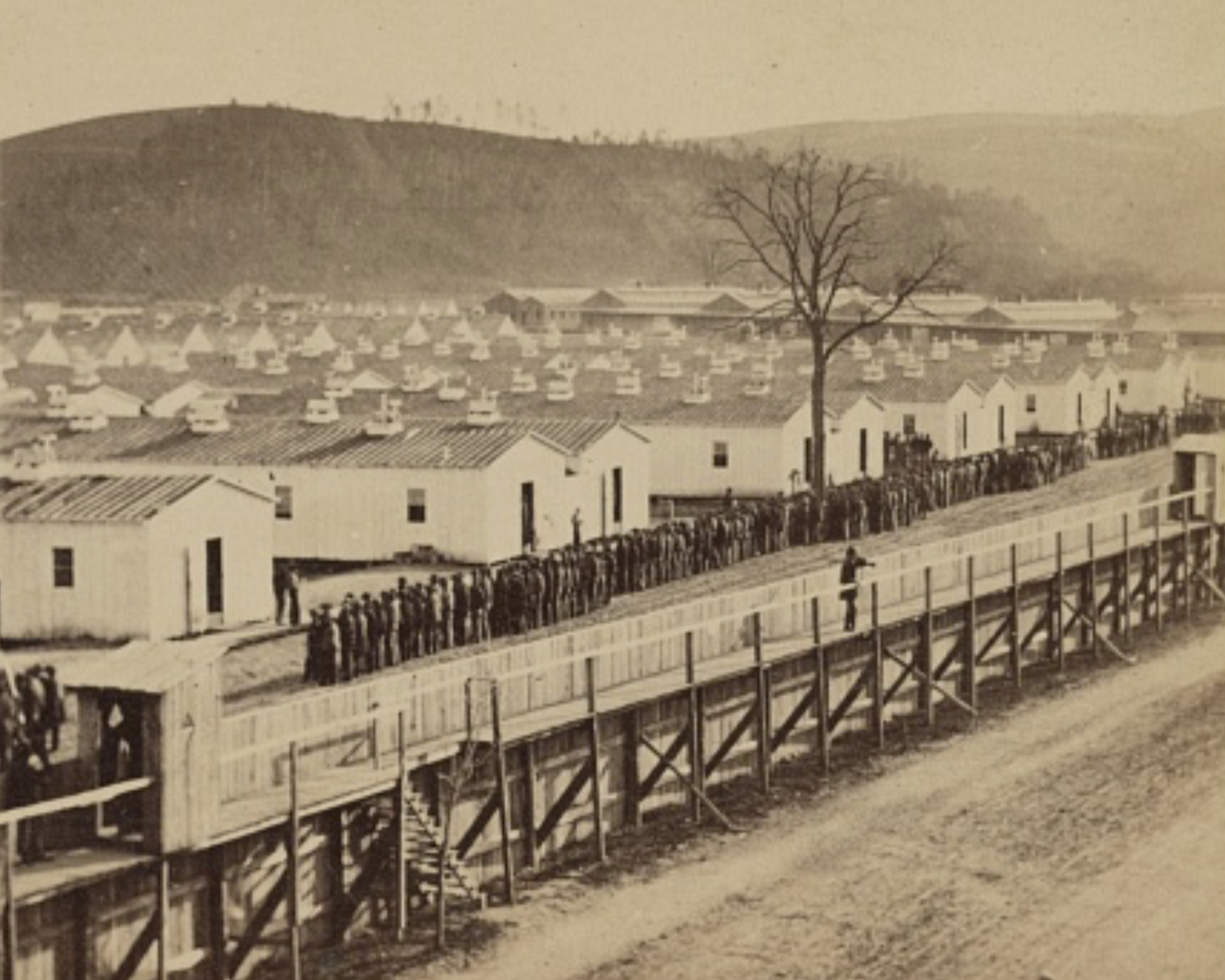
This photo of the Elmira prison camp in New York was taken from an elevated position in 1865. A row of Confederate prisoners is seen standing along the fence.
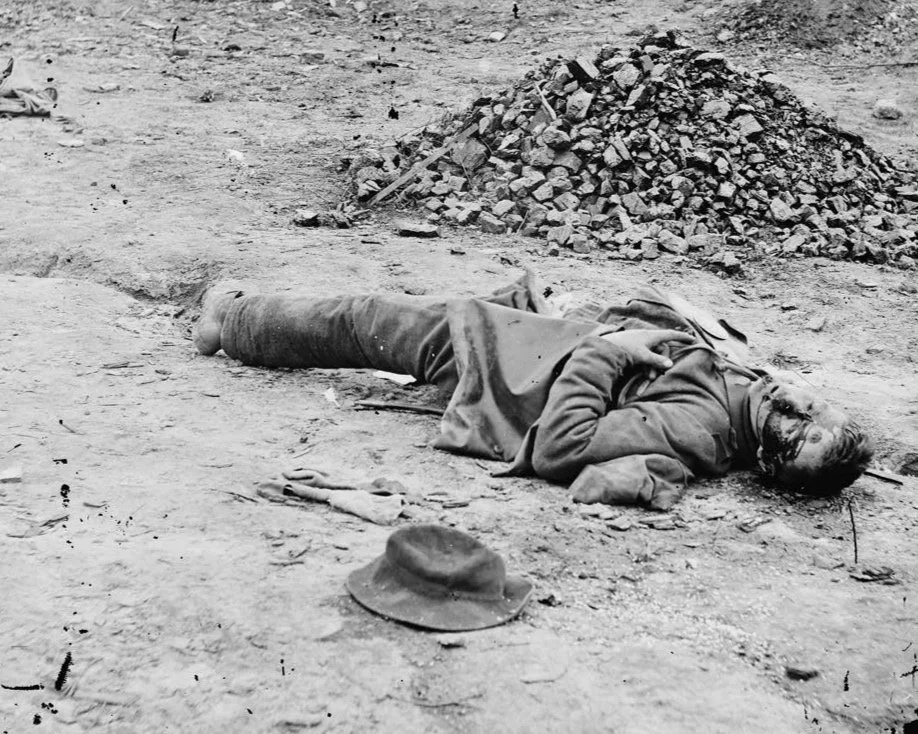
This 1865 photo shows a dead Confederate soldier lying in the Petersburg trenches.
Interestingly, in October 1865, Andrew Johnson, who assumed the presidency upon Lincoln’s death, issued a proclamation appointing Thursday, December 7, as a day of national thanksgiving that year. This early December Thanksgiving came seventy-six years before President Franklin Roosevelt signed the joint resolution passed by Congress fixing Thanksgiving as the fourth Thursday of every November.
Nevertheless, on the last Thursday in November of 1865, both Green brothers were home in Granville County with their father and their families. Undoubtedly, a Baptist church planter who had not seen two of his boys for several years was thankful to God, especially knowing that another grandson was on the way. William Green’s second son, conceived just after Appomattox and born on January 8, 1866, was my great-great-grandfather Green. And undoubtedly, two brothers, one now twenty-one years of age and the other twenty-eight, both having miraculously survived the Bloody Angle within half a mile of one another, were both thankful to God.
For these Greens, descendants of those who had come to North Carolina two centuries prior, the last Thursday of November in 1865 was indeed the “peaceable fruit of righteousness” (Hebrews 12:11) for those who had been exercised by great trial and tribulation in a nation under divine judgment. They could truly give thanks for the hard times. Christian, can you do so today? Will you do so today, this Thanksgiving holiday, this last Thursday of November 161 years later?
Thomas Green, the Baptist church planter, lived in Granville County until 1888 and remained a member of Knap of Reeds Baptist Church until his death. Nicolas Green also spent the rest of his life in Granville County. He died on November 14, 1906, two weeks before Thanksgiving and about a week before his seventy-second birthday.
William Henry Green, my great-great-great grandfather, and his wife Lucy had nine children. He continued farming after the Civil War and somehow amassed 1,600 acres of land near Dexter, North Carolina. He built his own home by hand from local lumber. It had six rooms and a detached kitchen. He and his sons also built and managed a general store. Most of the stock for that store had to be hauled up from the railroad depot at Dabney, about 12 to 14 miles away. William Green was very successful at growing tobacco. The family had to roll the leaves into hogsheads and move them up to Richmond or Norfolk, Virginia, to sell. By the time of his death, he was able to leave 200 acres of land to each of his seven children and the equivalent value in money to the other two, a true example of Proverbs 13:22: ”A good man leaveth an inheritance to his children's children.”
Interestingly, near the end of his life, William Green found himself a Baptist church planter, like his father Thomas. He and Lucy had attended Island Creek Baptist Church for many years until they, along with other members of their local community, determined to plant a church in Dexter. The church building was completed in 1906. His aged wife even earned fifty dollars that year (about $1,875 in 2026) by working with her own hands and gave it all toward the completion of that building. William gave of his substance also, and left funds upon his death for the church to purchase adjacent land for a cemetery. He was the first to be buried in that cemetery.
William Henry Green died on November 6, 1909, nearly three years after his brother Nicolas’s death and nearly three weeks before Thanksgiving of that year. The pastor of Dexter Baptist Church, the local body William had been instrumental in helping to plant, preached his funeral, and Wilkins Stovall, one of his old Confederate messmates, assisted in his burial. He was the first person buried in the Dexter Baptist Cemetery.
Pastor R. H. Marsh declared plainly that Dexter Baptist Church was William’s “monument of unselfish liberality, neighborly goodwill, father feeling, and Christian enterprise and consecration.” In that funeral message, he also shared: “Our brother had but little formal education, but for the practical duties of life, first on the farm and then behind the counter, he was qualified. His first lessons of obedience, economy, and faithfulness were learned in Co. K., 55th N.C. Troops, under Captain Maurice T. Smith” (Captain Smith had been promoted to lieutenant colonel while William Green was in a Richmond hospital and was then killed at Gettysburg). The pastor continued, “He served in the war about three years, and purchased for himself a good name for a high degree of courage, endurance and faithfulness. After the war he settled near Dexter and by hard work, close attention and honest living accumulated a good estate and won for himself a good name for intelligence, industry, sobriety and usefulness. He was not without his faults; but these were largely compensated for, if not fully obliterated, by personal purity, noble aspirations, and high endeavors. He lived to do good, and will be missed by both his church and his state.”
William Green was married to Lucy Green for fifty-three years. She lived to the age of eighty-four, and folks say she had her own altercation with Yankee troops while William was off to war. As she struggled to maintain the farm by herself and with little two little ones, some Yankee cavalry came down the road from Williamsboro. They trampled down the corn in the area, took people's chickens and pigs, and scarfed anything edible from the farms of citizens. They tried to take Lucy’s best horse and her cured country hams. She chose to stand in the path of that calvary, right there in the road with her shotgun, and refused to budge. She openly protested and demanded that they return her horse and the hams. Surprisingly, those Yankees did, hanging their heads in shame, and continued on their way. They didn’t want to mess with that fiery little woman.
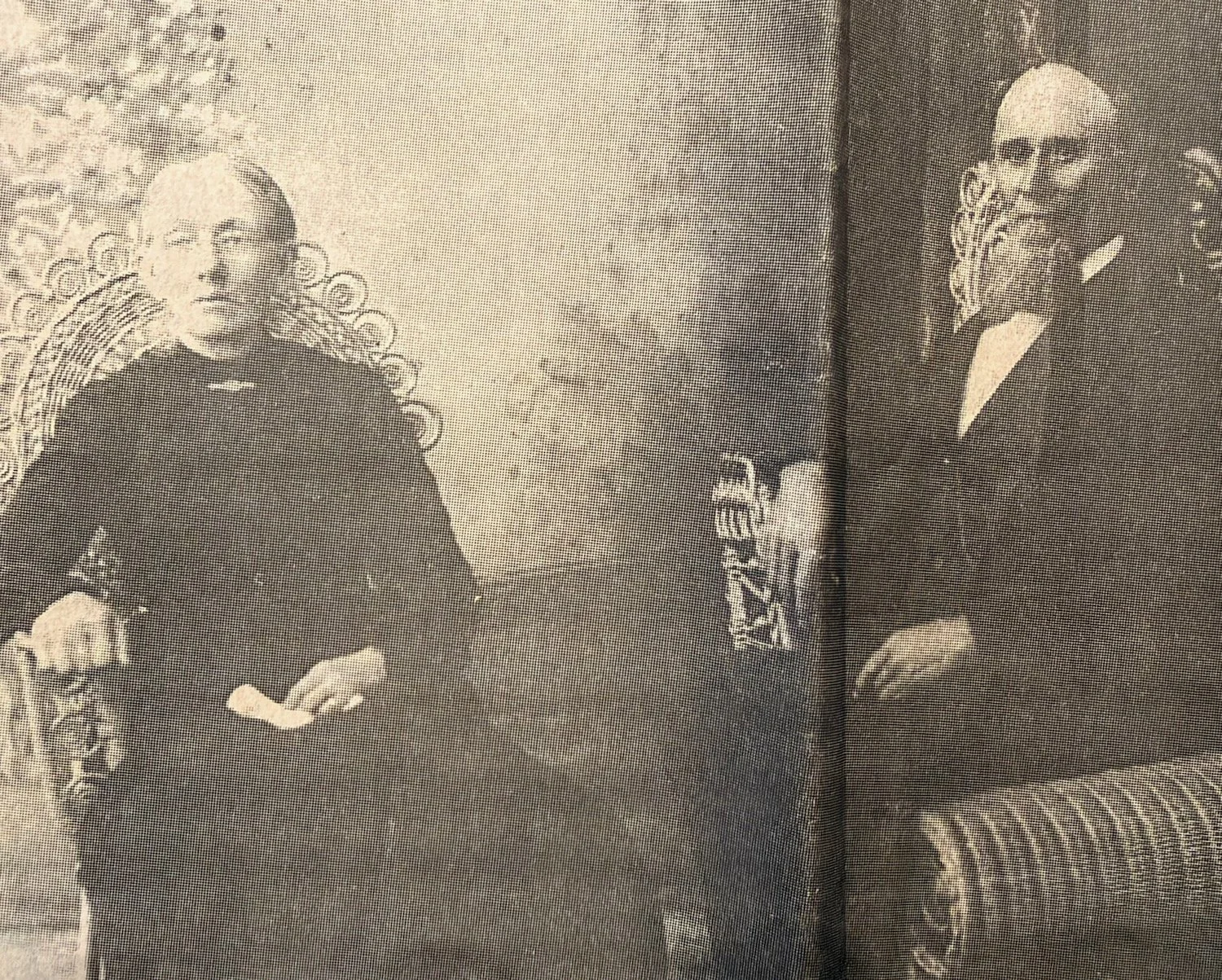
William & Lucy Green (ca. 1900)
Ira Thomas Green, the little baby conceived just after Appomattox and born in January 1866, lived until 1951. He was my great-great-grandfather. I have a picture of him as an old man seated in a rocking chair, with my great-great grandmother, Mattie, standing beside him. It is affixed to a piece of tin retrieved from an old building that remains standing on the farm that once belonged to them. Ira and Mattie Green are buried in the Dexter Cemetery with William and Lucy Green. They say Ira was a godly man, a gentle man, and a very patient man.
His grandson, Earl Green, was my grandfather. He died in 2012 and was such a faithful witness for Jesus Christ for all the years I was privileged to know him. Earl Green’s daughter is my mother, and I will be going to her house later today, the last place Earl Green lived before going home to the Lord, to enjoy a great time of Thanksgiving with my family.
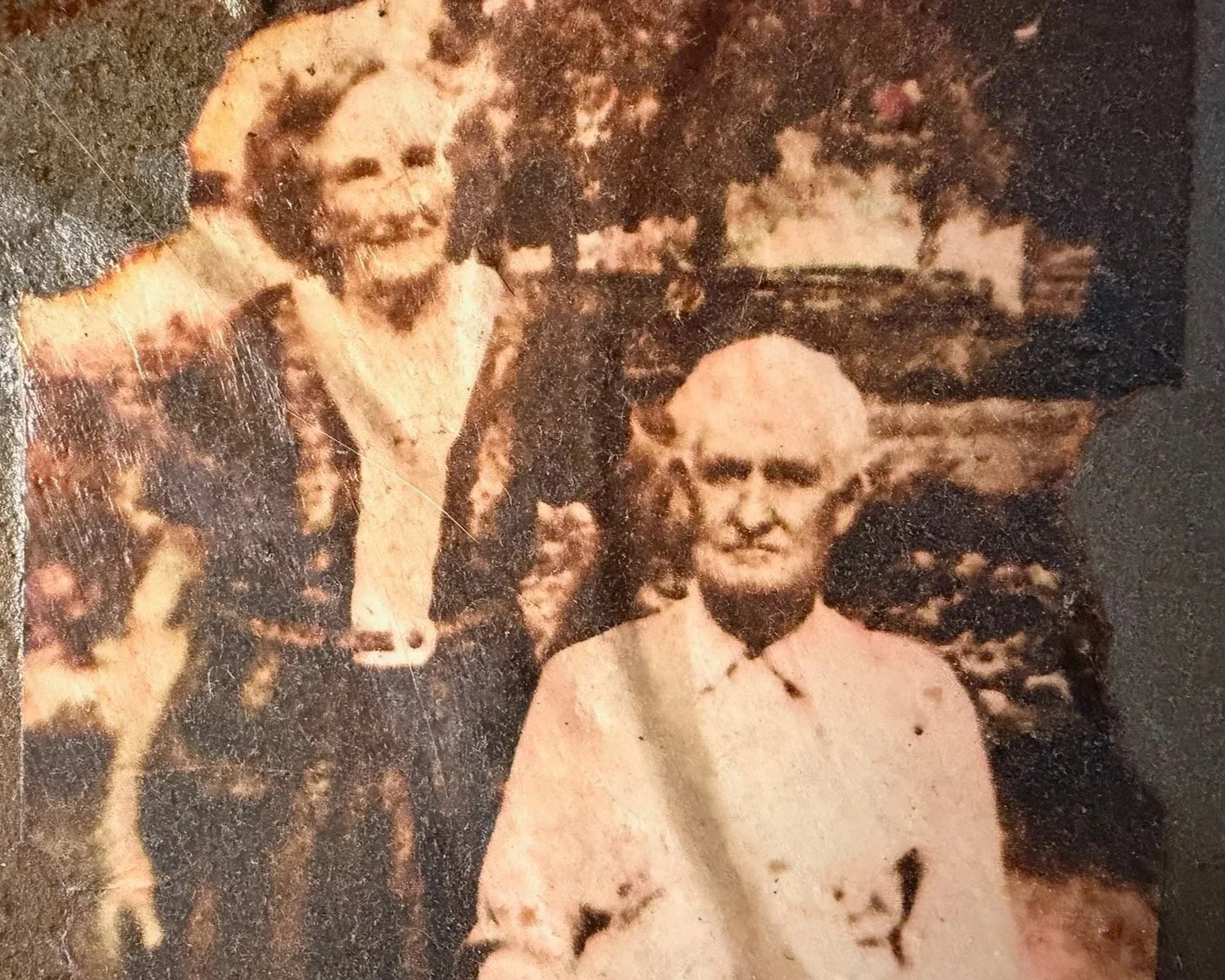
This old photo of Ira & Mattie Green is affixed to a piece of tin found on the site of their old farm in Granville County, NC.
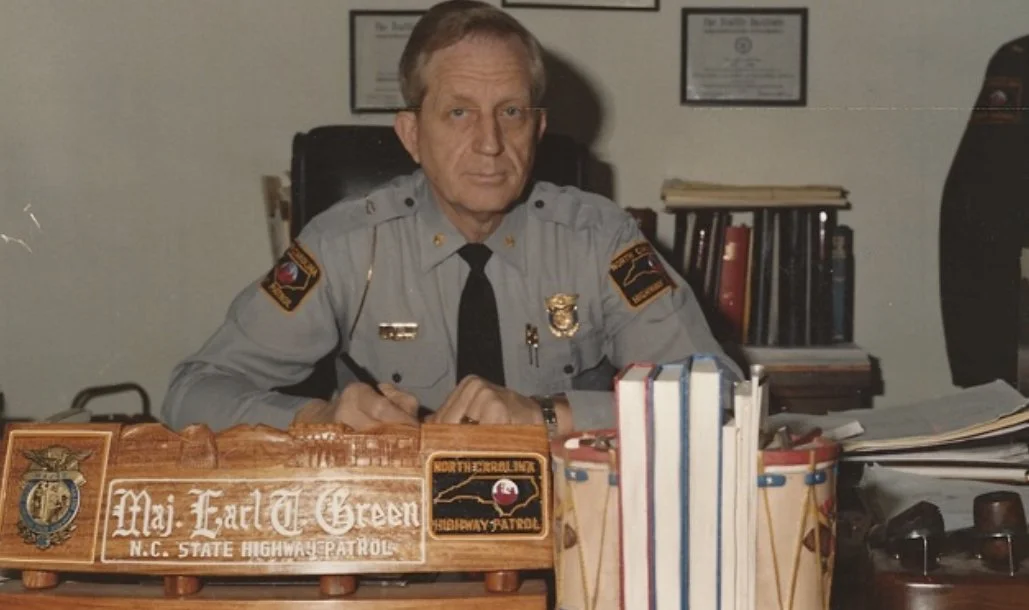
My Grandfather, Earl T. Green (1928-2012), was a bold and faithful witness for the Lord Jesus Christ.
For me, undoubtedly, it will be much like that last Thursday in November back in 1865, when William Green and Nicolas Green were together back home in Granville County with their father, Thomas Green. It will be a time to reflect upon times of great trial and tribulation and to be thankful for them, for “the peaceable fruit of righteousness unto them which are exercised thereby” (Hebrews 12:11).
This Thanksgiving, by all means give thanks to God for the blessings and the good times. But do not forget to thank Him also for the trials that prove more precious than gold. After all, it was the terrible time of trial for William Green from 1862 to 1865 that ultimately “purchased for himself a good name for a high degree of courage, endurance, and faithfulness.” He carried that peaceable fruit of righteousness to the end of his life and thereby ended up a Baptist church planter just like his father before him. Moreover, those depressing Thursdays in both 1863 and 1864 for TWO BROTHERS IN NOVEMBER, gave way eventually to many special Green Family Thanksgivings over many years to come. Even for me, my fondest Thanksgiving memories were the turkey and stuffing around the table of my own Green grandparents.
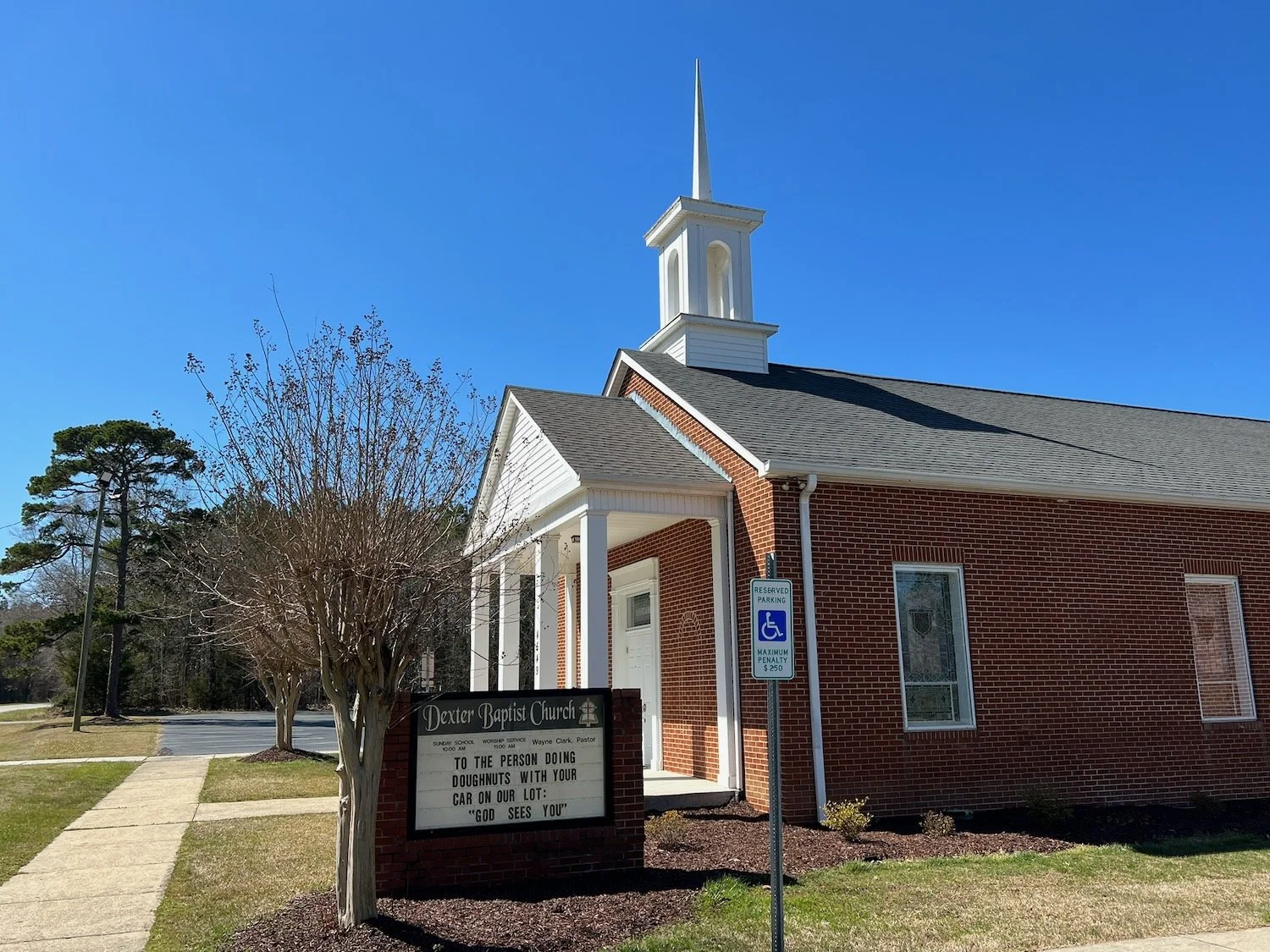
I took this photo of Dexter Baptist Church in early 2023.
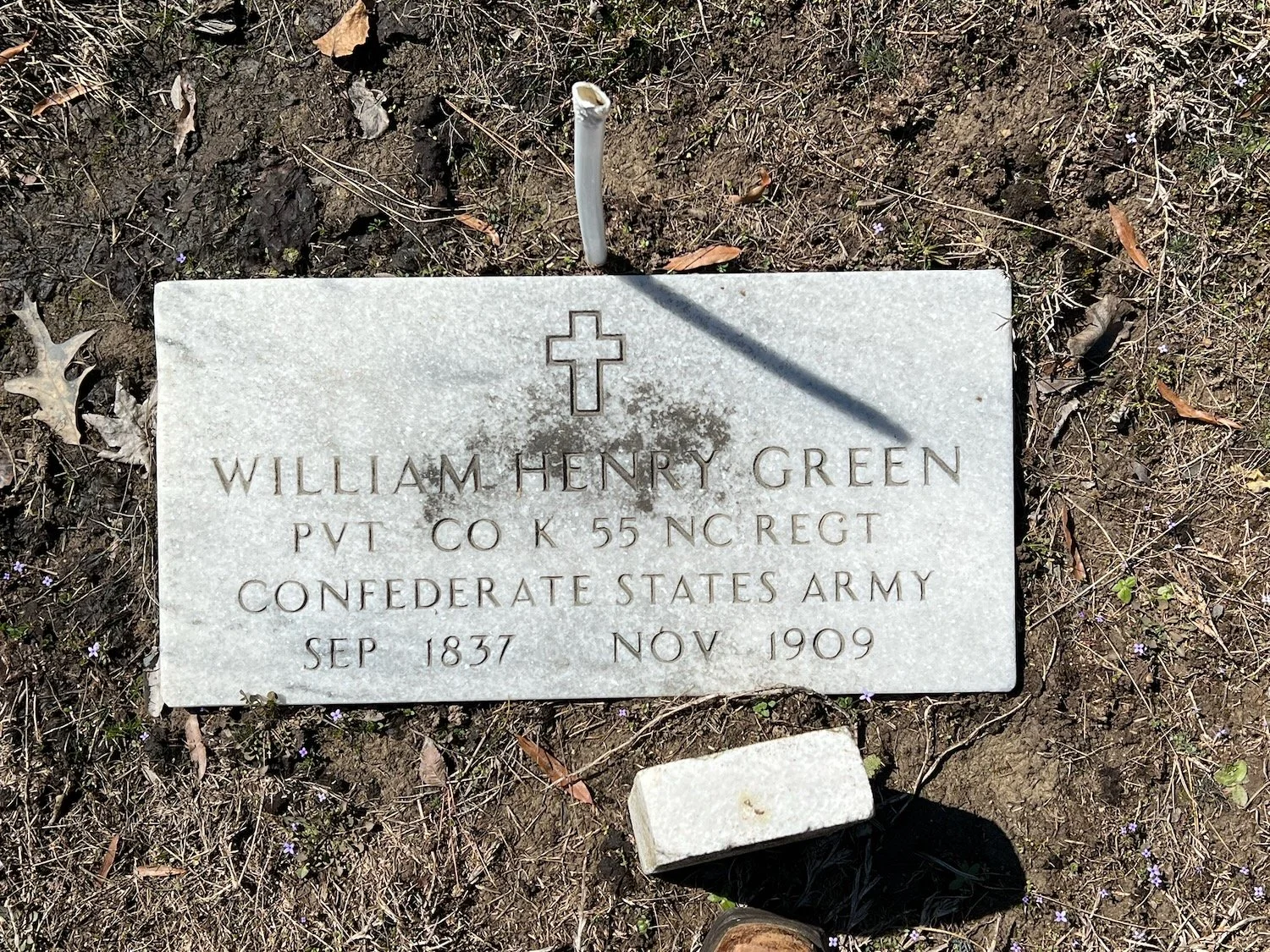
Grave of William, Henry Green in the Dexter Baptist Church Cemetery
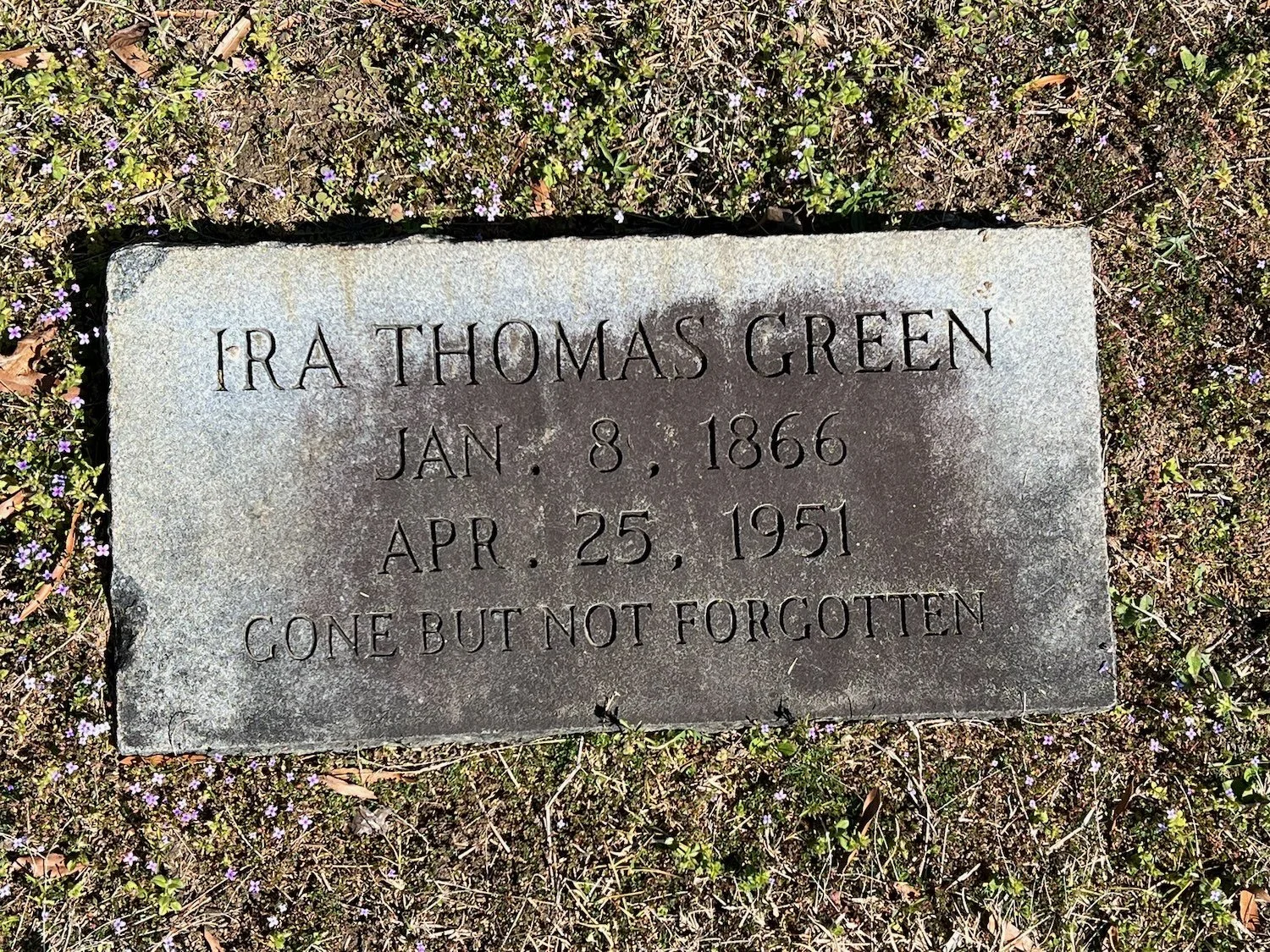
Grave of Ira Thomas Green in the Dexter Baptist Church Cemetery
I am truly a lesser son of greater servants of the Lord, both Greens and Boyds, and I long for the day when I can stand with them in the presence of the Lord, worshipping and giving thanks to Him together.
Happy Thanksgiving!