
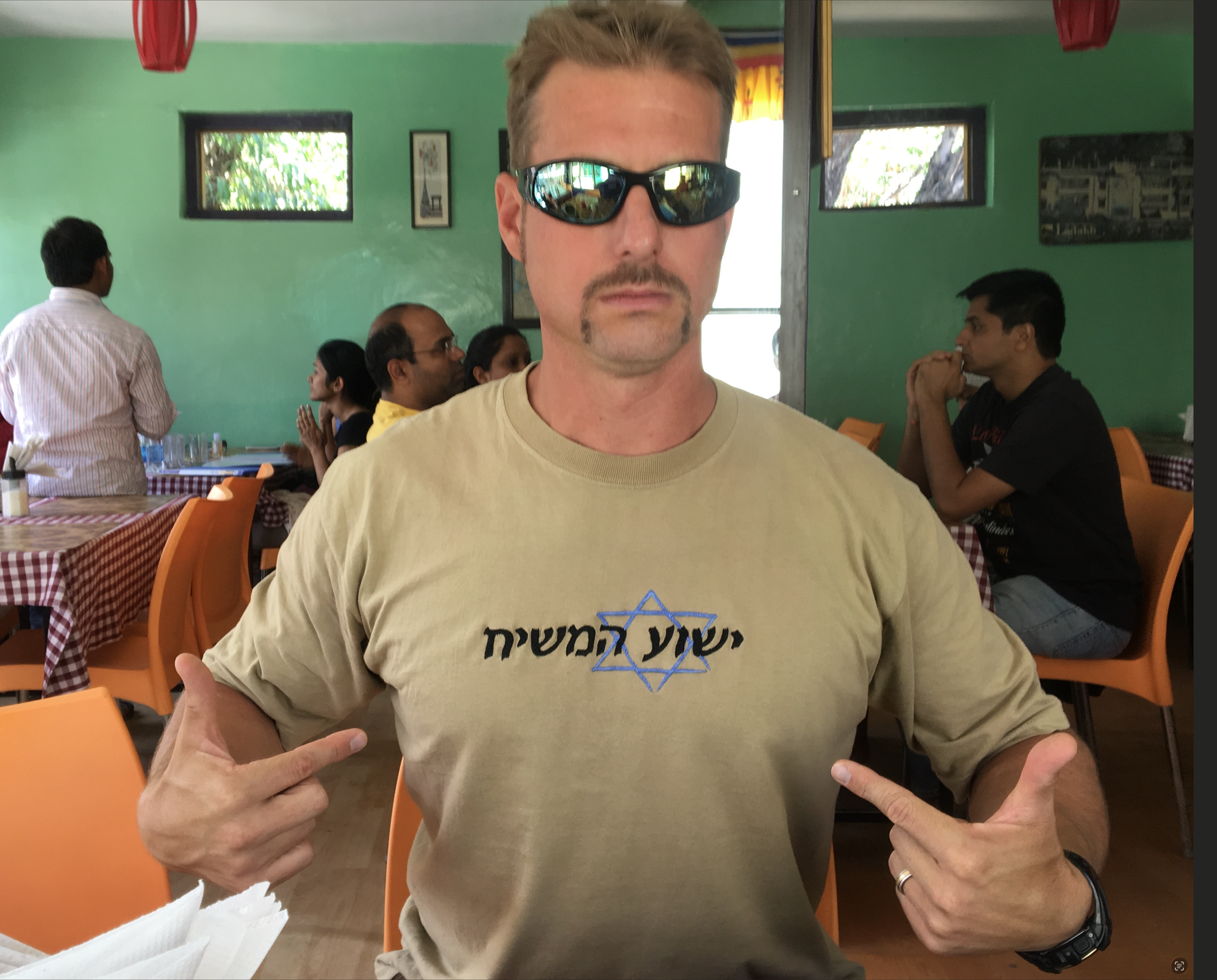
Jesus is the Messiah!
A dear friend of mine referred to posts like this as his “morning vitamins” for which he was most grateful. I trust you, too, are blessed thereby this Saturday morning.
I wrote a few days ago about getting out of portrait mode while studying the Scriptures. Landscape mode, particularly in the Psalms, really sheds light on the great themes of God’s Word, and it becomes apparent that even the very order of the Psalms is precisely on purpose. The Gospel is all over the Old Testament, and the progressive unveiling of truth in the Psalms not only declares it but mirrors the spiritual roller-coaster of the believer in this old flesh.
As the first 3 Psalms go together, as well as Psalms 10-13, consider 14, 15, and 16:
Psalm 14 is very clear—THE PROBLEM OF MAN. Man is not “basically good” or “inclined to goodness.” None left to themselves can do good; none left to themselves seek after God . . . no, not one! The first stop on the Romans Road (or second if you hit up 3:23 first) goes right back to this Psalm. Mankind has a big problem, even though many preachers and pastors today are afraid to talk about it. Oh, we talked about it on the loudspeaker yesterday at the stoplight, got a few middle fingers in response and a call to the police that we were threatening to “shoot people.” I don’t know where folks come up with this stuff. Man has a problem that man doesn’t want to hear about, and he will even lie to shut out having to listen to it, but he still has a problem. None are righteous, no, not one!
Then, Psalm 15 tells us plain concerning those who can abide in God’s presence—11 characteristics of a righteous man. Now, you may have been told that there is only one way to heaven, Jesus. Actually, there is another way . . . now, hear me out, I’m not denying the necessity of Christ or preaching heresy. John 14:6 is absolutely true. Yet, in Romans 2:10, Paul proclaims “Glory, honor, and peace, to every man that WORKETH GOOD, to the Jew first, and also to the Gentile.” Back in 2:6-7, he writes, God “will render to every man according to his deeds: To them who by PATIENT CONTINUANCE IN WELL DOING seek for glory and honour, and immortality, eternal life.” In other words, a man can come into the presence of God and have eternal life IF he works good his entire life and does so WITHOUT SIN. Live a perfect life in thought, word, and deed, you will be saved! Here’s the problem though, and Paul makes it plain in the next chapter of Romans, as does Psalm 14: Nobody can or does do this! No one measures up to God’s standard of goodness. “For all have sinned and come short of the glory of God” (Romans 3:23). And like David confesses in Psalm 51, we are “shapen in iniquity; and in sin did my mother conceive me” (51:5). Psalm 15 is the roadmap to eternal life through works. How do we measure up? The American Church certainly does not, especially verse 4. I wish there were more Christians today who give their word and keep it, even if it brings them great hurt or sacrifice. I am suddenly reminded of a Christian man in Washington State who heard me preach about missions in his local church once. After the service, HE APPROACHED ME and declared: “Jesse, God spoke directly to my heart during your message, and He told me I am to start supporting your missions ministry $150.00 a month. I just wanted to tell you now, so be expecting a check each month. God told me to do it; I am going to do it.” In that moment, I was very grateful and saw this as a real answer to prayer, a specific meeting of real needs. Sadly, a check never came from that man, never saw a single one. That’s been years ago and really was the first of many such encounters with believers who swear to their own hurt and then CHANGE. Anyway, I read Psalm 15 and am convicted to strive for this fruit. But, when I zoom out and read it in light of Psalm 14, I come away with a giant conclusion slapping me in the face: I NEED A MESSIAH! WE NEED A MESSIAH! If this is the type of man that has access to God and His tabernacle, if this is God’s standard of righteousness, I am in big trouble. We need a Messiah to stand in our place before the LORD, exactly what Job longed for: “O that one might please for a man with God, as a man pleadeth for his neighbor” (Job 18:21)!
Is there a Messiah, and if so, how can we know Him or identity Him? The answer is right there in Psalm 16. The Messiah is the one who raises up from the dead by the power of God and without the agency of another man (as the son of the Shunamite woman by the agency of Elisha, Dorcas by the agency of Peter, or Lazarus by the agency of Jesus). The Messiah is one who is dead, AND BURIED (unlike the others who were raised from the dead in the Scriptures). His body is in the grave, and HE GETS UP OUT OF IT. That is how we identify the Messiah, and the Apostles preached this. Both Peter and Paul cite this very Psalm in their public preaching in the Book of Acts! And what Job longed for (18:21), he confessed could be found: “For I know that my redeemer liveth, and that he shall stand at the latter day upon the earth. And though after my skin worms destroy this body, yet in my flesh shall I see God” (19:25).
Study these three Psalms and mediate upon three simple and powerful truths woven throughout the Scriptures, in both the Old Testament and the New:
Psalm 14: WE ARE GUILTY!
Psalm 15: WE ARE HELPLESS WITHOUT A MESSIAH!
Psalm 16: WE ARE ONLY HOPELESS IF THERE IS NO MESSIAH . . . AND THERE IS . . . THOUGH DEAD AND BURIED, HE GOT UP OUT OF THE GRAVE!
Now, in view of this wonderful gift of God and out of gratitude for our Messiah, let’s go forth and live like Psalm 15 by the power of the Holy Spirit! And we can start by being those who keep their word.
I was reading through one of my old journals this morning, one from more than ten years ago, and it’s almost funny: Long before God gave me the heart to take the Gospel to the JEWISH PEOPLE FIRST, and also to the Gentiles . . . I had opportunity to speak of such things to two lost sheep from the House of Israel, both within a few weeks of each other and each in the most unexpected of places. I was pedaling a bicycle all the way to the tip top of Alaska. I had just crossed into Alaska, and it was somewhere on the remote stretch of the Alaska Highway between the border with the Yukon and the town of Tok. A guy with a big head of curly black hair pouring out of his bicycle helmet pedals by going the opposite direction, and I noticed he had very pragmatically fashioned two kitty litter containers as waterproof panniers (travel bags for a bicycle). I flagged Solomon down, and we talked for a few minutes about long bicycle rides and those kitty litter contraptions. I shared how I believed upon the God of Israel, like Abraham, and how the Scriptures are clear that we need a Messiah. Solomon took a Gospel tract. Never in that moment would I have ever thought I’d be crossing paths years down the road with a whole slough of Solomons on a journey going somewhere, speaking of and showing to them things concerning Yeshua the Messiah from the Old Testament Scriptures. It was a few weeks later, and I was walking the streets of Anchorage, trying to sow a few seeds of the Gospel here and there. I was hungry and passed by a “Falafel Stand.” I thought, “Hmm, something different.” Inside, I found Avi, a former special forces officer in the Israel Defense Forces (IDF). God gave me great grace to share with him as I had with Solomon on that lonely highway. And strangely, I just happened to have a Hebrew New Testament in my truck that my cousin in Las Vegas had given me long before, encouraging me to seek out and be faithful in opportunities to share the Gospel, not just with Gentiles, but also with Jewish people that He might put into my path. Talking to Avi, I remembered that and went out to grab the Hebrew New Testament. He took it with gratitude. Years later, I was back in Alaska and decided to go look for that falafel stand. It was there, but Avi was out. His wife had died, and He was struggling. His daughter was running the shop that day. I shared how I had met her father years earlier and gave him a Hebrew New Testament. I told her that I had come back this time to give him a Hebrew Old Testament to go with it. It was a really nice hard-backed Tanakh. She became overwhelmed with emotion, and I asked if I could pray for her and her family right there in the restaurant in the name of Messiah. She agreed, and I prayed the Gospel. This young lady was so grateful, expressing it with tears, and she promised to give that Tanakah to her father along with my greetings. I wonder what ever happened to Avi and Solomon? Pondering upon Psalm 14-16 this morning brought them to mind.
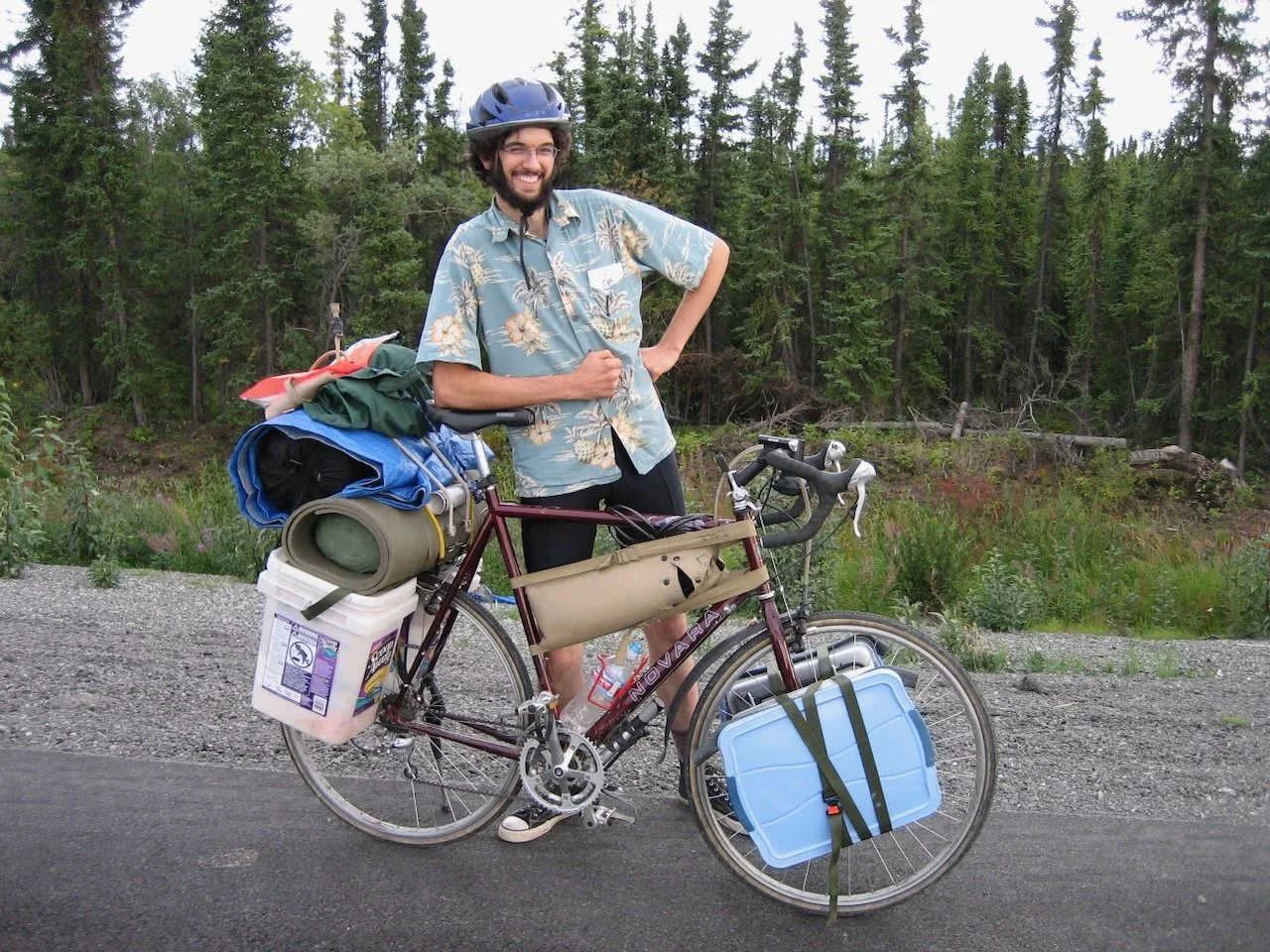
Solomon (2009)
As for you, I pray this dose of morning vitamins will be strength to last throughout the day. Praise God for the Messiah and that we can know exactly WHO HE IS!