
hanukkah is in the bible
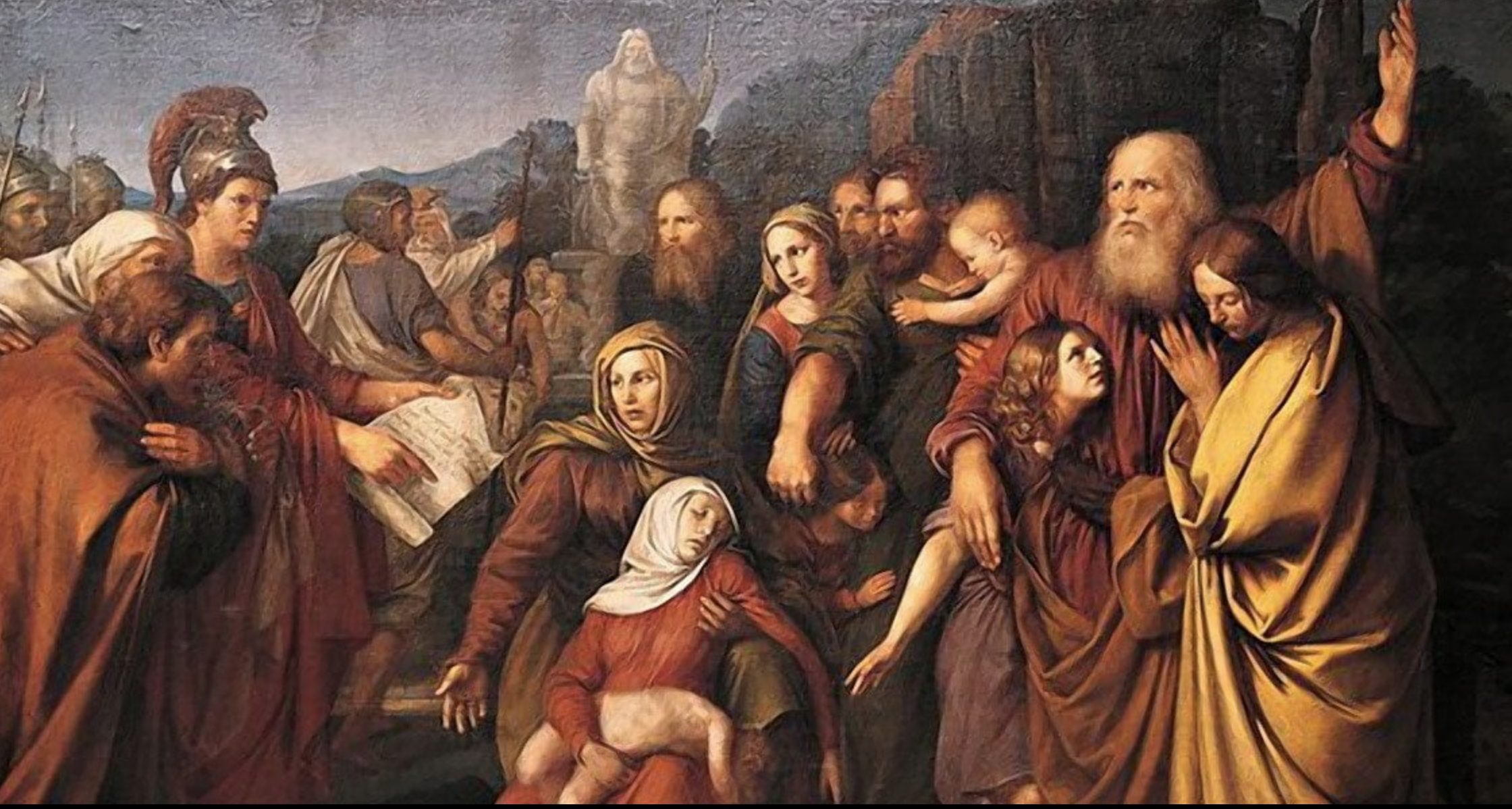
Today, December 14th at sundown, is the start of the Jewish feast of Hanukkah.
As I was composing what follows, I learned of the horrible Bondi Beach massacre in Australia. It’s a dark sign of the times, and I am reminded of the words of Jesus:
Woe unto the world because of offences! for it must needs be that offences come; but woe to that man by whom the offence cometh! (Matthew 18:7).
Woe to those who perpetrate such things, and woe unto those who celebrate them!
Over the years, I have used the occasion of Hanukkah to send out personal messages in the name of Yeshua HaMessiach to some of the Israeli backpackers we had previously met in South Asia and South America, pointing them to the Truth of the Scriptures trusting the LORD to use my words somehow in their lives back in Israel. Once, a young man I had met in Peru replied: “Nice to hear from you. Thank you very much and happy Hanukkah.” Another responded, “Happy Hanukkah and Merry Christmas to you and your family. I’ll wait for you to come back to Israel.” Such small things have proved a source of great joy, even amidst tribulation (Zechariah 4:10); and so, I encourage our Team Yeshua volunteers to do the same for those they met and with whom they exchanged contact information this past summer in South Asia.
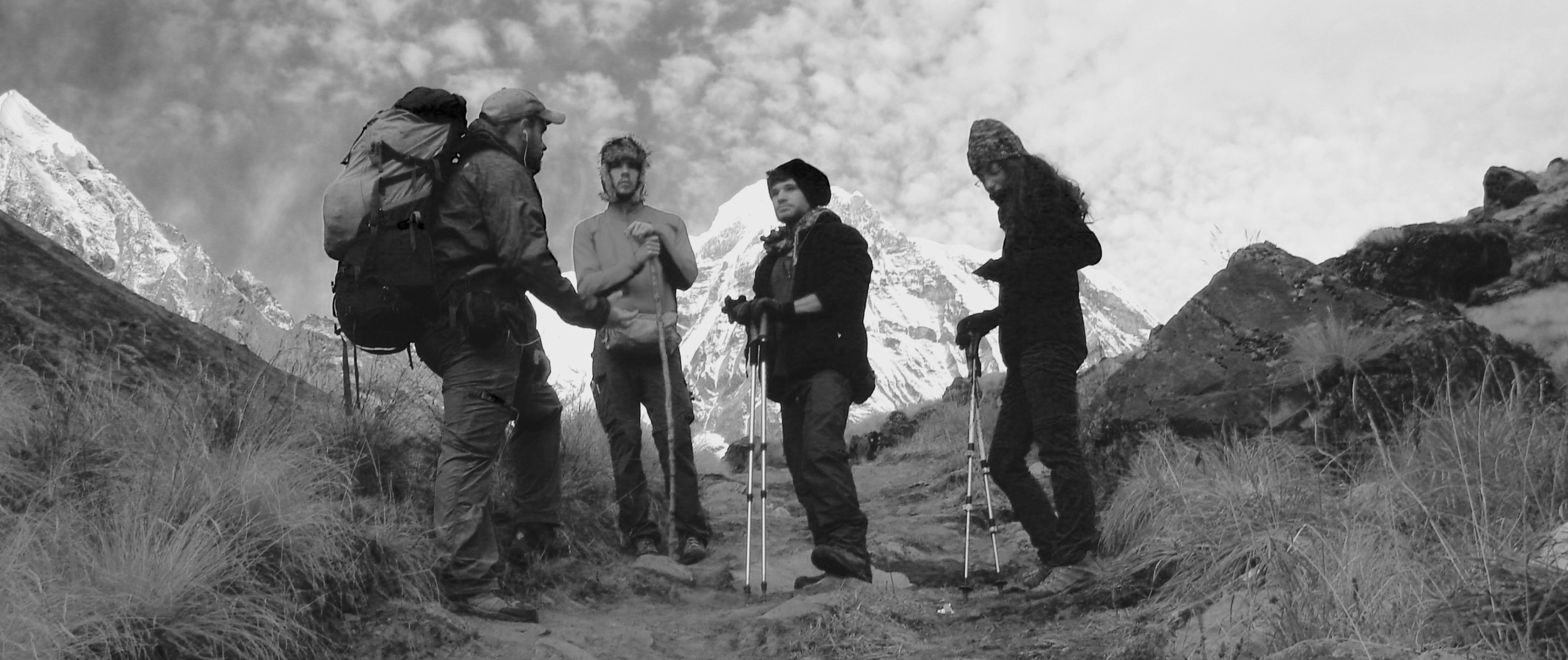
Team Yeshua Volunteers Sharing Testimony of the Jewish Messiah to Israeli Backpackers while Trekking in Nepal (2015)
Some years ago, I asked my children around the breakfast table if Hanukkah is in the Bible. They said “No” as would most Christians, but this is not correct. Hanukkah IS in the Bible. Jesus used the observance of that feast, the feast of the dedication in the winter (John 10:22) to preach bold truth in the temple on Solomon’s porch. He spoke of His true sheep who would hear His voice and follow Him. They would have eternal life and not fear men. And no man would be able to pluck them out of His Father’s hand. We often read these words of John 10 as if they were spoken in a vaccum and fail to consider the historical context of the events that were being remembered during the Feast of Hanukkah the Jews were observing that winter.
The events of the first Hanukkah are also prophesied in great detail in the Bible more than 360 years before they took place—history written in advance (see Daniel 11:21-34). This near horizon prophecy is given as a type or foreshadow of a far horizon prophecy and ultimate fulfillment as will transpire at the “time of the end” (11:35), in and through the person of Antichrist. Daniel 11:21-34 prophesies in detail the rise of the Seleucid King Antiochus IV Epiphanes, the “king of the south” and a “vile person.” Verse 35 covers the period of the Jewish Diaspora that has existed from 168BC until the present day, as indicated by the phrase “even to the time of the end.” And beginning with verse 36, the focus shifts to Antichrist, of whom Antiochus IV Epiphanes was a TYPE. The proof that these last verses are not talking about Antiochus is found in verse 40. Antichrist is opposed by both the “king of the south” and the “king of the NORTH.” Antiochus IV Epiphanes of Daniel 11:21-34 WAS the king of the NORTH. Anyway, these events prophesied years before they transpired were fulfilled exactly like Daniel was told by the angel in the 3rd year of King Cyrus of Persia, and they gave rise to the Feast of Hanukkah, just as the events of Esther gave rise to the Feast of Purim.
During these days of tyranny in Israel that would foreshadow what is coming for the Jews under Antichrist, there were a few who refused to believe Antiochus’ flatteries and lies and who saw the coming tyranny for exactly what it was, when many of their fellow Jews in the cities went along to get along, being told it was for their “health and safety.” Daniel also prophesied these few who would not go along. Daniel 11:32 says many in Israel would be corrupted by the flatteries, “but the people that DO KNOW THER GOD shall be strong, and DO EXPLOITS. And they that understand among the people shall instruct many.” Faithful women in Jerusalem refused to disobey God concerning the circumcision of their infant children in the face of an executive order that forbade them to do so. Antiochus’ officials, including Jews who went along with him, took their circumcised baby boys and hung them from trees, killed their faithful mothers. These things are recounted in the Apocryphal Book of First Maccabees (1:60-61). These “chose rather to die that they might not profane the holy covenant: so then they died. And there was great wrath upon Israel.”
The Book of First Maccabees IS NOT INSPIRED HOLY SCRIPTURE. It is a contemporary historical account that confirms exactly what Daniel 11 prophesied 360+ years earlier. For that reason, it has value and is worth a read, particularly in the days of tyranny in which we live, not much unlike the early years of Antiochus Epiphanes’ flatteries that secured his power. The King James translators made it very clear that the Apocryphal writings were not Scriptures and did not intermingle them with the Old Testament like the Catholics had done. Instead, they were stuck between the Testaments in the original 1611 edition of the King James, much like maps are stuck at the end of modern-day editions for historical insight. The King James translators, men of a quality and character that would put to shame 99% of today’s American pastors and seminary professors, stuck them there to give the reader an idea of the kinds of things that were happening during the 400 years of silence between Malachi and the angel’s appearing to Zacharias in Matthew 1. And, they declared in their preface why these were not to be considered Holy Scripture and gave clear reasons, not the least of which are glaring theological contradictions. Yet, the historical accounts contained therein do prove the Scriptures to be true and that they can be trusted. God always does exactly what He says He is going to do. I would say First Maccabees is a historical account that affirms biblical prophecy just as do accounts of the history of the Modern State of Israel. Second Maccabees, on the other hand, is more mystical and fanciful, exaggerating historical events for religious purposes . . . just like the Catholics used to do with their relics and concerning the rise of the papacy. Anyway, First Maccabees is worth a read because it is a mostly historical account that proves God’s words in Daniel 11. Moreover, it explains why the Jews were celebrating Hanukkah in Jesus’ day and why our LORD chose that day to preach in the temple.
Hanukkah exists today because one country priest and his five sons were vexed by the blasphemies and tyrannies that had been committed in Jerusalem under Antiochus IV Epiphanes. They saw and considered the sacrifices that some women of Jerusalem were willing to make, circumcising their children in obedience to God even if it meant their own death and the death of their baby boys. And they said, “Enough. We will not comply. We will defy tyranny. And we will fight it.” And like Daniel 11:32 said would happen, those “WHO DO KNOW THEIR GOD” did EXPLOITS. Thus arose the Maccabees who stood in the gap between a very powerful tyranny and the people who were its victims. Antiochus was forced out of Israel where he met an untimely end much like Herod in Acts 11; the temple was cleaned up and rededicated to the LORD; and the menorah was re-lit according to God’s command (Exodus 27:20) with only enough of a supply of pure olive oil to last one day. It miraculously lasted 8 days, providing enough time to build up a supply of “pure oil beaten” so that the light would continue to burn always (Exodus 27:20); hence the Hanukkah menorah with 8 BRANCHES instead of the traditional seven from the time of Moses.
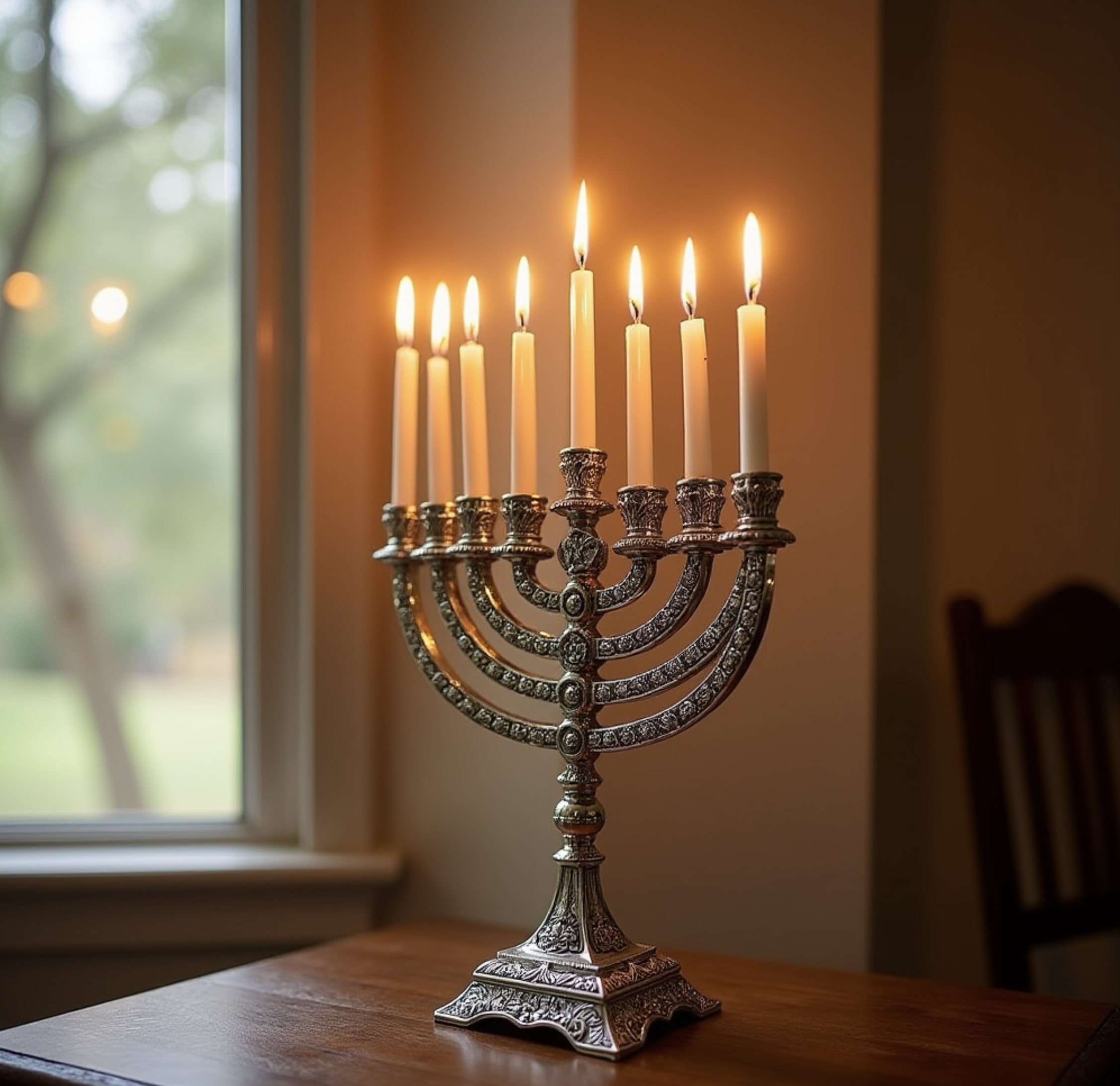
A Hanukkah Menorah with 8 Branches
Many years later, Jesus the Messiah came into the temple in Jersualem (just as the Prophet Haggai said He would—Haggai 2:7-9) on Hanukkah where that light was still burning, and He spoke of those who truly knew God, His sheep who would know Him and do His will. They would not fear, and no man could pluck them out of His Father’s hand. In other words, like the faithful in Israel many years before who knew their God and, therefore, not even Antiochus couple pluck them out of God’s hand (as opposed to the corrupted Jews who fell for the lies, cowered before the vile king, and betrayed their own people) . . . so would be our Lord’s disciples. They will know and be known of God. They will not fear men nor cower before them. They hear Jesus’ voice and know His will.
What power these words of the Messiah in John 10 should have for us living in these days! SO SHOULD BE US. Like the Maccabees of old, let us obey God rather than men (cf. Acts 5:29) and interpose in the face of tyranny. If we will not cower; if we will refuse to comply with fables (I Timothy 1:4) and oppositions of science, falsely so called (I Timothy 6:20); if we will stand in the gap and resist unjust rule and lawlessness; it may be that a band of a few, as in 168BC and in 1776 in the American colonies, WILL DO EXPLOITS and INSTRUCT MANY (Daniel 11:32-33). That, my friends, is the lesson of Hanukkah for us in 2025, those of us Americans who fear the God of our Fathers while yet living and subsiding in a nation that remains far from Him and under His Hand of Judgment.
“Wherefore they chose rather to die, that they might not be defiled with meats, and that they might not profane the holy covenant: so then they died” (I Maccabees 1:63-64).
And yes, Hanukkah IS in the Bible … and yes, we Gentile Christians can learn a great deal from it.
“And what shall I more say? for the time would fail me to tell of Gedeon, and of Barak, and of Samson, and of Jephthae; of David also, and Samuel, and of the prophets: Who through faith subdued kingdoms, wrought righteousness, obtained promises, stopped the mouths of lions, Quenched the violence of fire, escaped the edge of the sword, out of weakness were made strong, WAXED VALIANT IN FIGHT, turned to flight the armies of the aliens. Women received their dead raised to life again: and others were tortured, not accepting deliverance; that they might obtain a better resurrection: And others had trial of cruel mockings and scourgings, yea, moreover of bonds and imprisonment: They were stoned, they were sawn asunder, were tempted, were slain with the sword: they wandered about in sheepskins and goatskins; being destitute, afflicted, tormented; (Of whom the world was not worthy:) they wandered in deserts, and in mountains, and in dens and caves of the earth. And these all, having obtained a good report through faith, received not the promise: God having provided some better thing for us, that they without us should not be made perfect” (Hebrews 11:32-40).
May such testimony also compel us as Gentile Christians to genuinely desire the cry of the old Advent carol:
“O come, O come, Emmanuel, And ransom captive Israel, That mourns in lonely exile here, Until the Son of God appear.”
As Charles Spurgeon affirmed in a message once delivered to The British Society for the Propagation of the Gospel Amongst the Jews:
“May that happy day soon come! For when the Jews are restored, then the fullness of the Gentiles shall be gathered in; and as soon as they return, then Jesus will come upon Mount Zion to reign with his ancients gloriously, and the halcyon days of the Millennium shall then dawn; we shall then know every man to be a brother and a friend; Christ shall rule with universal sway."
Jesse Boyd